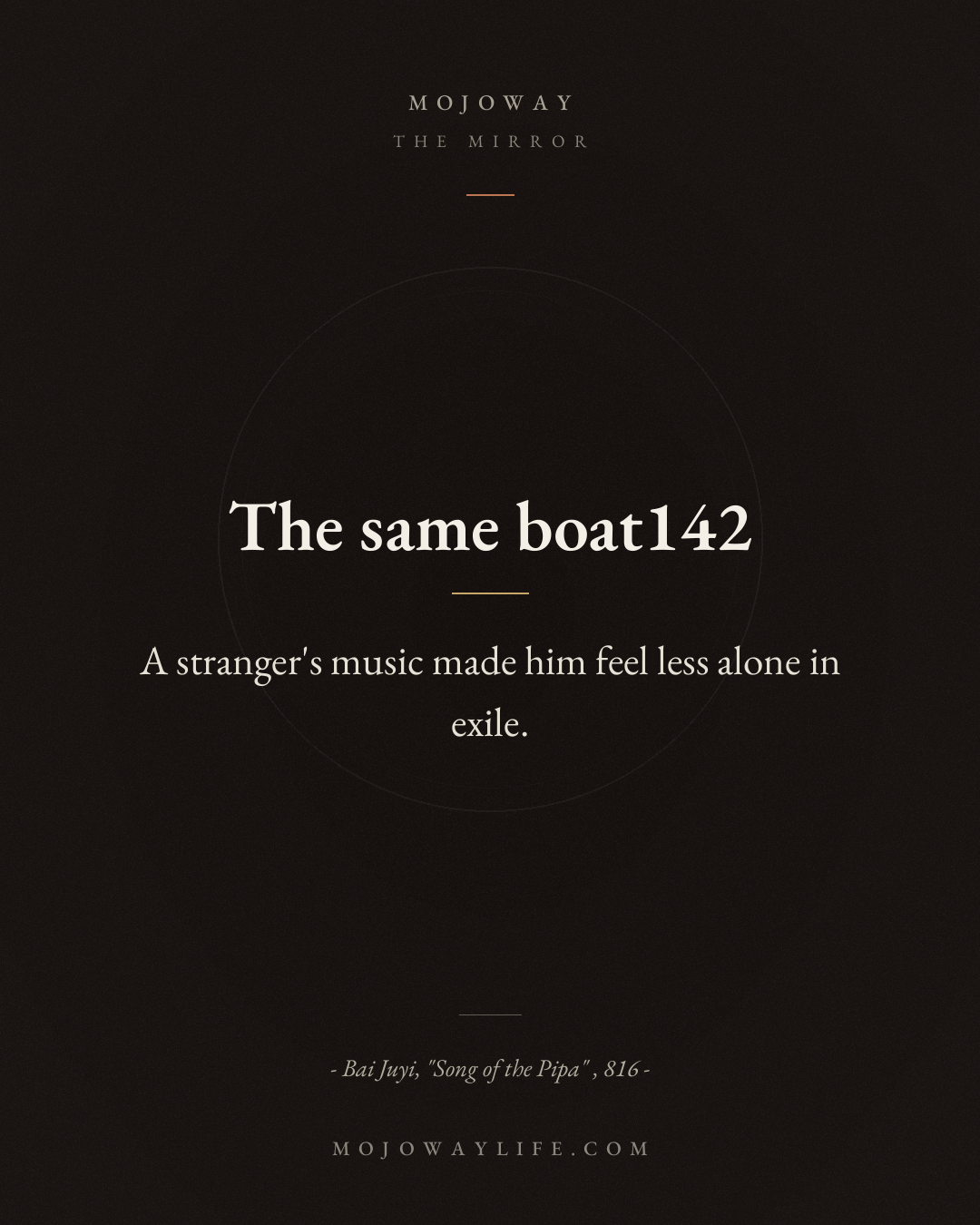
The same boat
Bai Juyi was exiled from the capital for writing poetry that offended people. He was in Jiangzhou, a damp posting, and in his own words he had no music there, not even proper stringed instruments, only the local reeds and flutes that grated on the ear.
One autumn night he was seeing a friend off at the river when he heard a pipa being played on a boat. The playing was extraordinary. He asked who it was.
She was a woman who had been a famous performer in the capital and had married a merchant who went away for months. She played for them and talked about her life. He wrote a long poem about the evening.
The famous line comes about two thirds of the way through: we're both people who have fallen from the world's favour, so meeting here, why do we need to have known each other before.
Two strangers, an exiled official and a former court musician, recognising each other because they were both displaced. Not because they had anything in common, or got along. Because they'd both had a life that ended.
I don't have a technique for this. I have an observation: the most consoling conversation of a bad year is almost never with the person who's thriving. It's with the person who's been where you are.
Which matters because we usually hide our worst years from the people best equipped to help, out of a wish not to be seen like that.
That night, Bai Juyi wrote eight hundred and sixteen characters. Two people who were not supposed to be in that town, drinking and listening to music in a boat, made something that has lasted twelve centuries.
It's worth being the person who says the true thing at a bad party. Somebody in that room is in a worse year than they're showing you.
MOJOWAY exists for the conversation after the performance: what actually happened to you this year.
See how the mirror works